As we move closer to finishing any creative work, there comes a moment when we need to look again at what we have made. We are not looking to tear it apart or chase perfection. We look again because there may be an element that needs attention, an idea that needs sharpening, or a small adjustment that brings the original vision more fully into focus.
That is the work of refinement, and it requires intention. Refining asks us to listen closely and pay attention to the details that matter. The challenge is knowing when those details strengthen the work and when we are simply getting lost in minutiae. Refinement should move the work closer to its purpose, not further away from the excitement that inspired us to begin.
You can hear that process throughout the Rubber Soul sessions. The recordings included on the Super Deluxe Edition allow us to hear songs taking shape through experimentation, performance, revision, and discovery. Early ideas become increasingly focused as The Beatles continue working with the material and discovering what each song needs.
“Day Tripper” and “We Can Work It Out,” the double A sided single recorded during these sessions, offer wonderful examples. In the early versions, you can hear John Lennon and Paul McCartney planting the seeds of ideas that eventually grow into the finished recordings we know today. Performances become stronger, arrangements take shape, and musical elements are added with purpose. The songs gradually become clearer versions of themselves.
That distinction matters because refinement does not necessarily mean changing the vision. Sometimes refinement means seeing the vision more clearly and removing whatever keeps us from realizing it.
I have experienced that during Four Weeks to Rubber Soul. I began this series with a rough outline and an idea of where I wanted the journey to go. As I started writing and recording each day, some of the words changed, some ideas shifted, and new connections emerged that I could not have anticipated when I created the original outline.
The framework gave me somewhere to begin, while the daily work helped me refine where I was going. I needed enough structure to keep moving and enough openness to listen when the work seemed to be pointing somewhere unexpected.
That may be the most important lesson for me today. Stay true to the vision while remaining open to what the work is teaching you. Refine what needs attention, but do not polish away the energy that made you excited about the idea in the first place.
The goal is not perfection. The goal is to make the work more fully what you hoped it could become. As you move closer to the finish, refine the work while protecting the spark that made you want to begin.
As the finish line approaches, starting is no longer the challenge. We have committed. We have focused. Now we have to sustain the momentum long enough to finish what we started.
The final stretch of Rubber Soul fascinates me because of the pace The Beatles maintained. During the last week of recording, they were still creating new songs, returning to unfinished ones, adding overdubs, and working increasingly long sessions. On November 11, with the deadline closing in, they worked for 13 hours. “You Won’t See Me” and “Girl” were recorded, while “Wait” and “I’m Looking Through You” received the additional work they needed. This was not a quick burst of inspiration. They had to sustain their energy, concentration, and creativity until the work was finished.
Sustain means more than keeping busy. It means carrying something forward after the initial excitement has faded. A new idea can give us energy. A deadline can give us urgency. Neither guarantees that we will stay with the work. Sustaining momentum requires us to keep showing up when the work becomes difficult, repetitive, or uncertain.
I also wonder whether something besides the deadline was sustaining The Beatles. They were discovering new possibilities in the studio. They were stretching their songwriting, experimenting with instruments and sounds, and beginning to understand that the recording studio could become part of the creative process itself. Imagine realizing, together, that you are onto something. That feeling must have been difficult to leave behind.
Maybe that is why the momentum did not end with Rubber Soul. Only a few months later, The Beatles returned to the studio and began recording Revolver, pushing many of those creative possibilities even further. The finish line for one project became the starting line for another.
I feel some of that through Four Weeks to Rubber Soul. Showing up every day has created momentum of its own. Some days have come easily. Others have required more effort. Each day has reminded me that creative momentum deserves care if we want it to last.
Today’s word is Sustain. Keep showing up. Protect the energy around the work. Stay curious about where it might lead.
Momentum gets us moving. Sustaining it helps us discover how far we can go.
I keep coming back to the focus it took for The Beatles to finish Rubber Soul. They were working against an immovable deadline, with EMI needing a new album ready for the Christmas market. A deadline can certainly sharpen our attention, but I wonder if something else was driving them. Maybe they knew they were onto something. Maybe they could feel the music changing and did not want to lose the momentum.
Consider “I’m Looking Through You.” The Beatles first worked on the song on October 24, spending hours developing a version that ultimately did not make the album. They returned to it on November 6 and tried again. They still were not satisfied. Four days later, with the deadline looming, they started over once more and finally found the arrangement we know from Rubber Soul. The song was completed with additional vocals and handclaps during their marathon final recording session on November 11.
That is focus. Focus is not always sitting down, locking in, and getting everything right on the first attempt. Sometimes focus means returning to something that is not working. It means staying with an idea long enough to discover what it can become. The Beatles could have settled for one of the earlier versions. Instead, they kept listening, adjusting, and returning to the work.
Focus is not always easy for me, either. My own creative work has plenty of starts and stops. Doubt creeps into the process. Confidence disappears. Other responsibilities compete for attention, and sometimes the easiest response is to put the work aside and promise myself that I will return later.
This daily series has taught me something about focus. Showing up every day for Four Weeks to Rubber Soul has required me to keep returning to an idea, writing about it, recording a reel, and putting it into the world. The discipline has helped me focus, but it has also helped me appreciate what focus actually requires.
Today’s word is Focus, but focus cannot simply be something we practice for one ephemeral day. It is something we choose again tomorrow. We return to the song. We return to the page. We return to the idea that still needs our attention.
The deadline may get us into the room. Focus keeps us there long enough to finish something that matters.
Welcome to the fourth and final week of Four Weeks to Rubber Soul. For the past three weeks, we have explored what it means to begin, collaborate, and experiment. Now we arrive at our final theme: Finish.
Our word for Day 22 is Commit because finishing begins with a decision. At some point, the experiment needs a commitment. Ideas become work when we commit to finishing them.
The Beatles understood that reality during the making of Rubber Soul. For all the creativity surrounding those sessions, there was also an immovable deadline. The Beatles needed to deliver a new album in time for the Christmas market. They could experiment with unusual sounds, rewrite songs, abandon takes, work through long sessions, and chase new ideas, but eventually they had to finish the record.
That deadline did not stop experimentation. It gave the experimentation somewhere to go. The ideas had to become songs, the songs had to become an album, and the album had to be finished.
I am thinking about commitment quite a bit these days. I am finishing my second book, Leadership Riffs, after months of writing, revising, questioning, discovering, and trying again. There comes a point in any creative project when the question has to change. We stop asking whether the idea could become something and start doing the work necessary to make it something.
The same is true for Four Weeks to Rubber Soul. I have made it through three weeks of daily blog posts and reels. The novelty and excitement of beginning have faded. I have experimented publicly, shared ideas that were still developing, and kept showing up even when the engagement sometimes disappointed me.
Now there are seven days remaining. This final week is less about asking, “Can I do this?” and more about saying, “I am going to see this through.”
Commitment matters because beginnings are exciting and experiments are full of possibility. Finishing asks something different from us. It asks us to keep showing up after the novelty disappears, continue when the response is quieter than we hoped, and stay with the work long enough to complete what we started.
The Beatles had a record to finish. I have a book to finish and seven more days of this creative journey to complete. You may have something waiting for your commitment too.
As we begin this final week, think about the unfinished work in your own life. What idea, project, dream, or creative pursuit deserves more than another someday? What would happen if you decided that now is the time to see it through?
That is where Finish begins. It begins with a commitment to the work and a decision to keep going until the work is complete.
As we wrap up Week Three of Four Weeks to Rubber Soul, I am still carrying the positive energy from two wonderful moments: the release of the Rubber Soul Super Deluxe Edition and the opportunity to speak at FabFest in Charlotte. Both experiences arrived at just the right time as we close a week centered on one theme: Experiment.
Experimentation is how we discover what we could not have planned. The key word in that sentence is Discover, our word for Day 21. This week, we have explored curiosity. We have tried. We have played. We have taken risks. We have approached new frontiers. We have rested. Each word has invited us to move beyond what we already know and remain open to what might emerge.
That is the gift of experimentation. We may begin with an idea of where we are going, but discovery can reveal possibilities we never imagined. Sometimes the most meaningful result of an experiment is not what we create. It is what we discover along the way.
The Beatles did not enter EMI Studios in October 1965 with every innovation on Rubber Soul mapped out. They experimented with sounds, instruments, arrangements, tempos, harmonies, and approaches. Their curiosity opened doors, and their willingness to try new things helped them discover possibilities that expanded their music and helped redefine what a Beatles album could be.
That idea feels especially meaningful to me today because I started Four Weeks to Rubber Soul as an experiment. I wanted to spend four weeks reflecting on this remarkable album while exploring what its creation could teach us about creativity, collaboration, and our own work. Three weeks later, I am discovering where some of these ideas might lead me.
This experiment has produced more than 21 blog posts and reels and counting. More importantly, it has helped me see a new thread in my own work. I originally planned to speak about my book The Pepper Effect at FabFest. That work uses The Beatles and Sgt. Pepper’s Lonely Hearts Club Band as a lens for thinking about leadership, collaboration, creativity, and culture.
Something began to shift as I spent these weeks immersed in Rubber Soul. I started wondering whether the ideas I explored in The Pepper Effect could reach beyond Sgt. Pepper. I began looking at the larger creative journey of The Beatles and seeing a thread that stretches across albums, songs, relationships, risks, failures, breakthroughs, and reinventions.
A new idea began to emerge from that exploration. I started calling it The Beatles Effect, a broader look at what the creative journey of The Beatles can teach us about creativity, collaboration, growth, leadership, and possibility. Rubber Soul became an ideal entry point because it captures a band willing to move beyond what had worked before and discover what might come next.
Instead of simply revisiting The Pepper Effect at FabFest, I decided to experiment. I shared this emerging idea of The Beatles Effect and used Rubber Soul to help tell the story. The response was warm and encouraging, and I left FabFest inspired to keep exploring where this idea might lead.
None of that was part of my original plan when I started this series three weeks ago. The idea emerged because I stayed curious, tried something, played with ideas, accepted some risk, and stepped toward a new frontier. Discovery did not arrive because I knew exactly where I was going. It arrived because I was willing to experiment.
As Week Three comes to a close, consider your own experiments. Think about something you have tried recently without knowing exactly where it might lead. Consider the possibilities that may have appeared simply because you gave yourself permission to explore. What has your experiment helped you discover?
Discovery matters because it shows us possibilities we could not see when we began. Eventually, those possibilities ask something more from us. We have to decide what deserves our attention, commit to the work, and bring something across the finish line.
Tomorrow begins our fourth and final week of Four Weeks to Rubber Soul, and our theme is Finish. We have spent three weeks beginning, collaborating, experimenting, and discovering what might be possible. Now it is time to take what we have discovered and finish what we started.
Sometimes in the creative process we can get weighed down by the burden of shipping the work. There may be external deadlines or self-imposed accountability. It’s a labor of love, but it is important to take care of ourselves. You can give yourself permission to pause and recharge.
Today’s word is Rest. Take time to rest and nurture your nervous system.
Check out today’s reel recorded outside the FabFest in uptown Charlotte, NC. I was honored to be a featured author/speaker there.
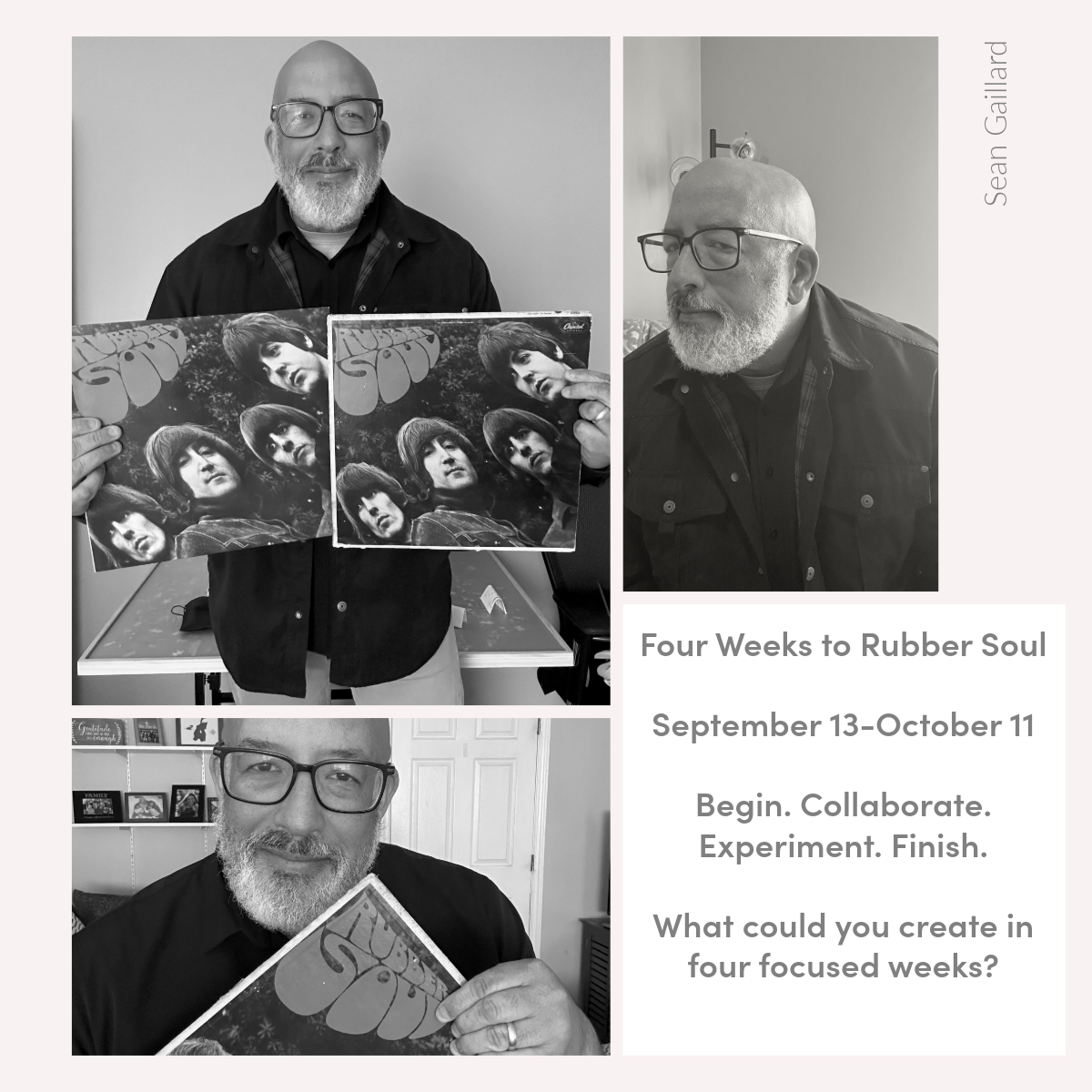
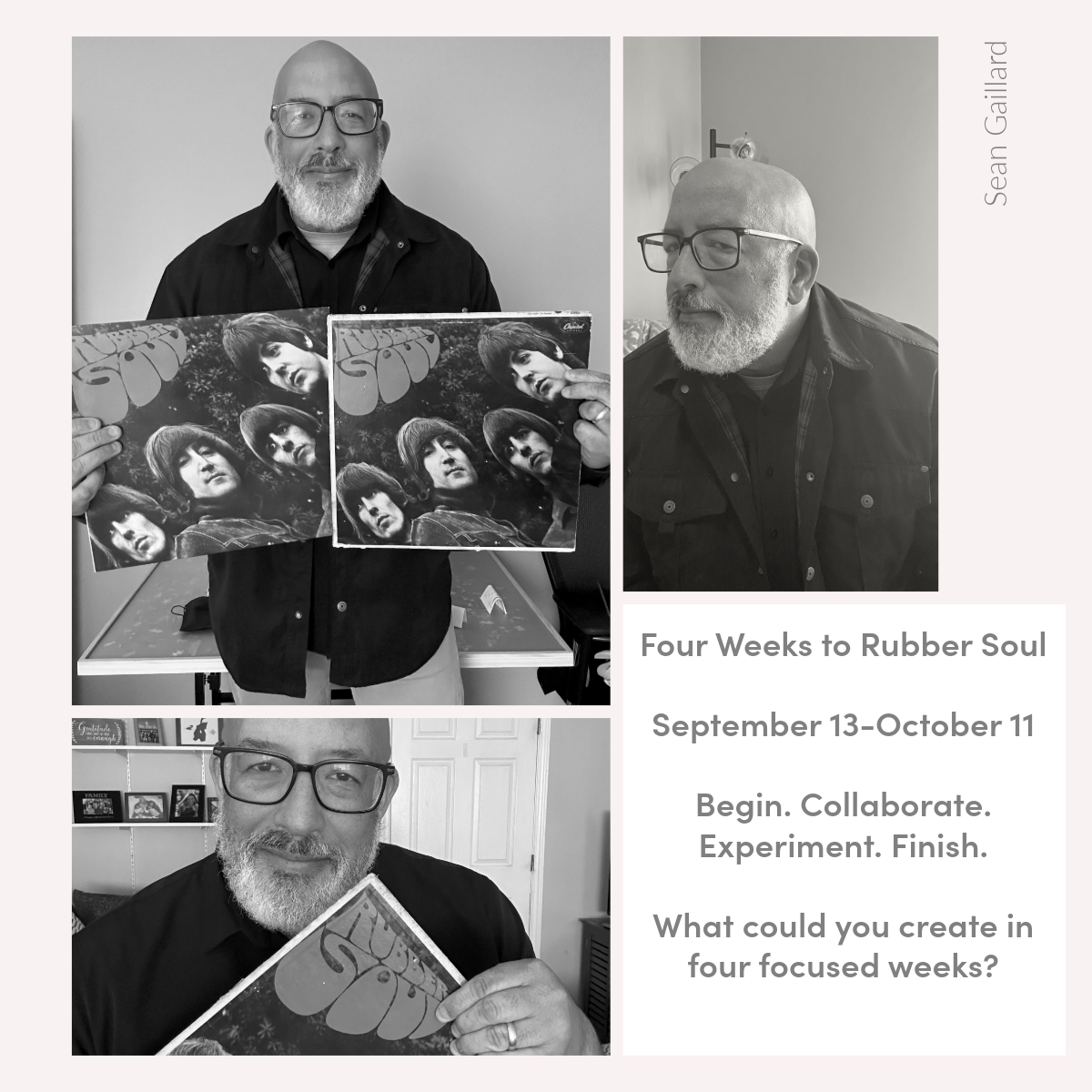
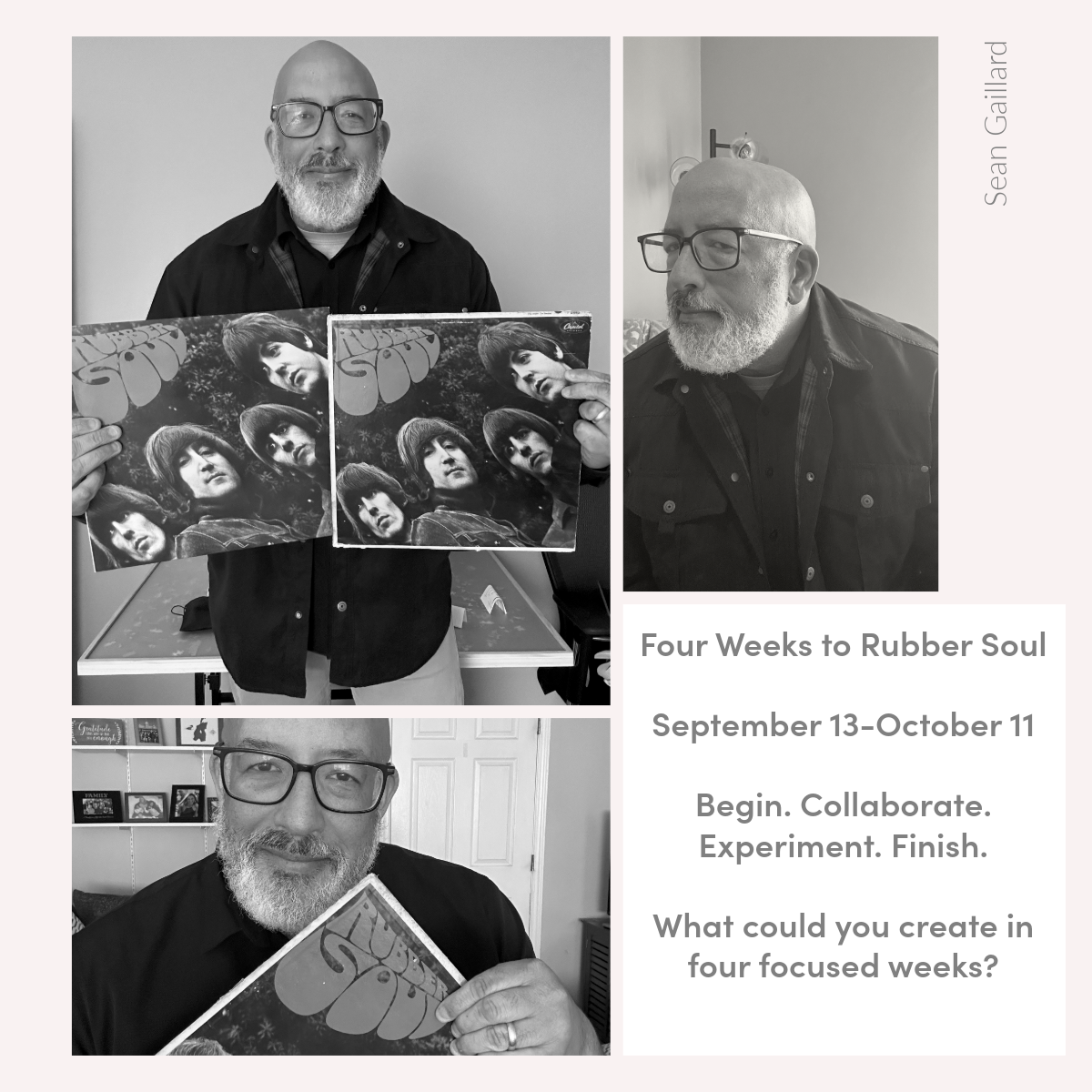
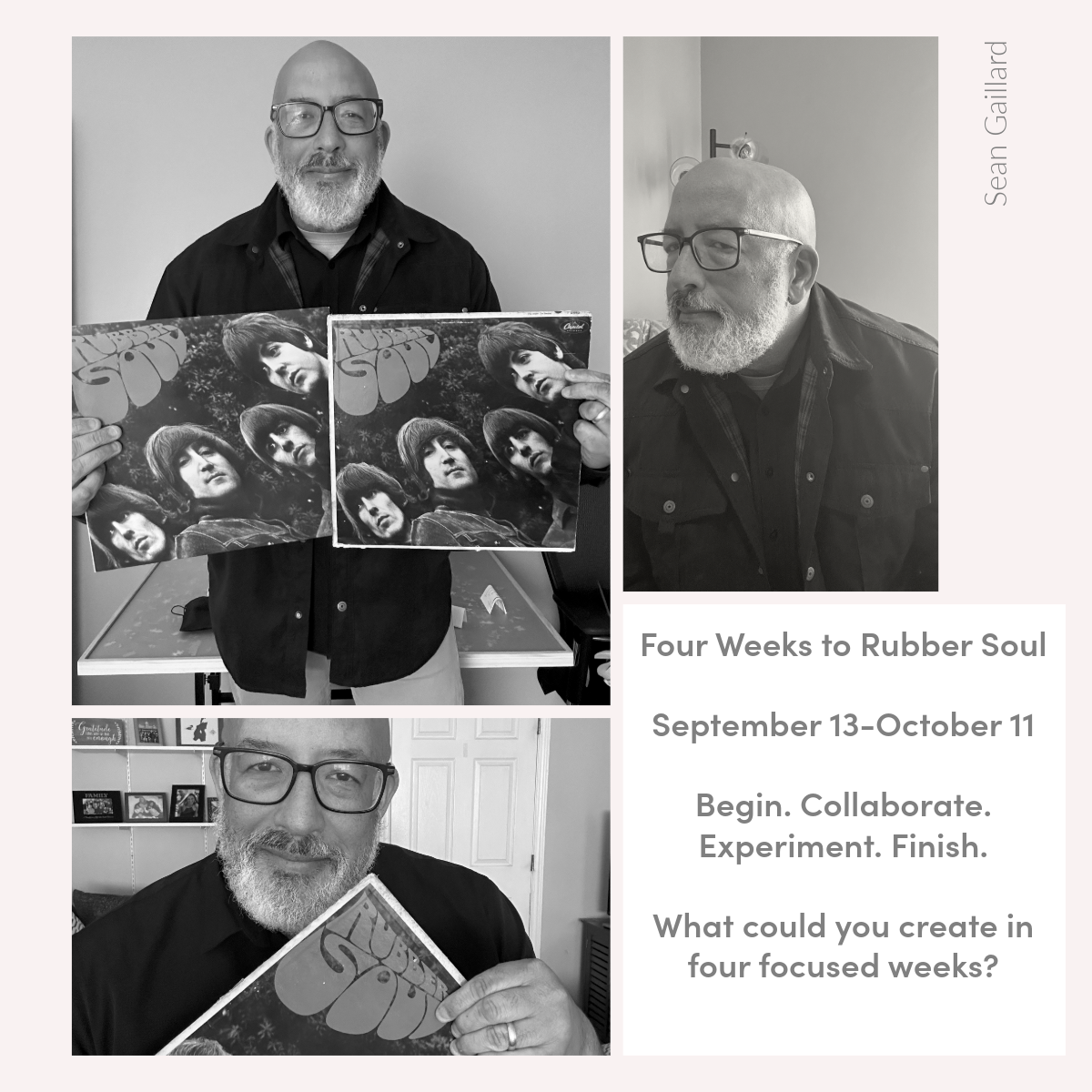
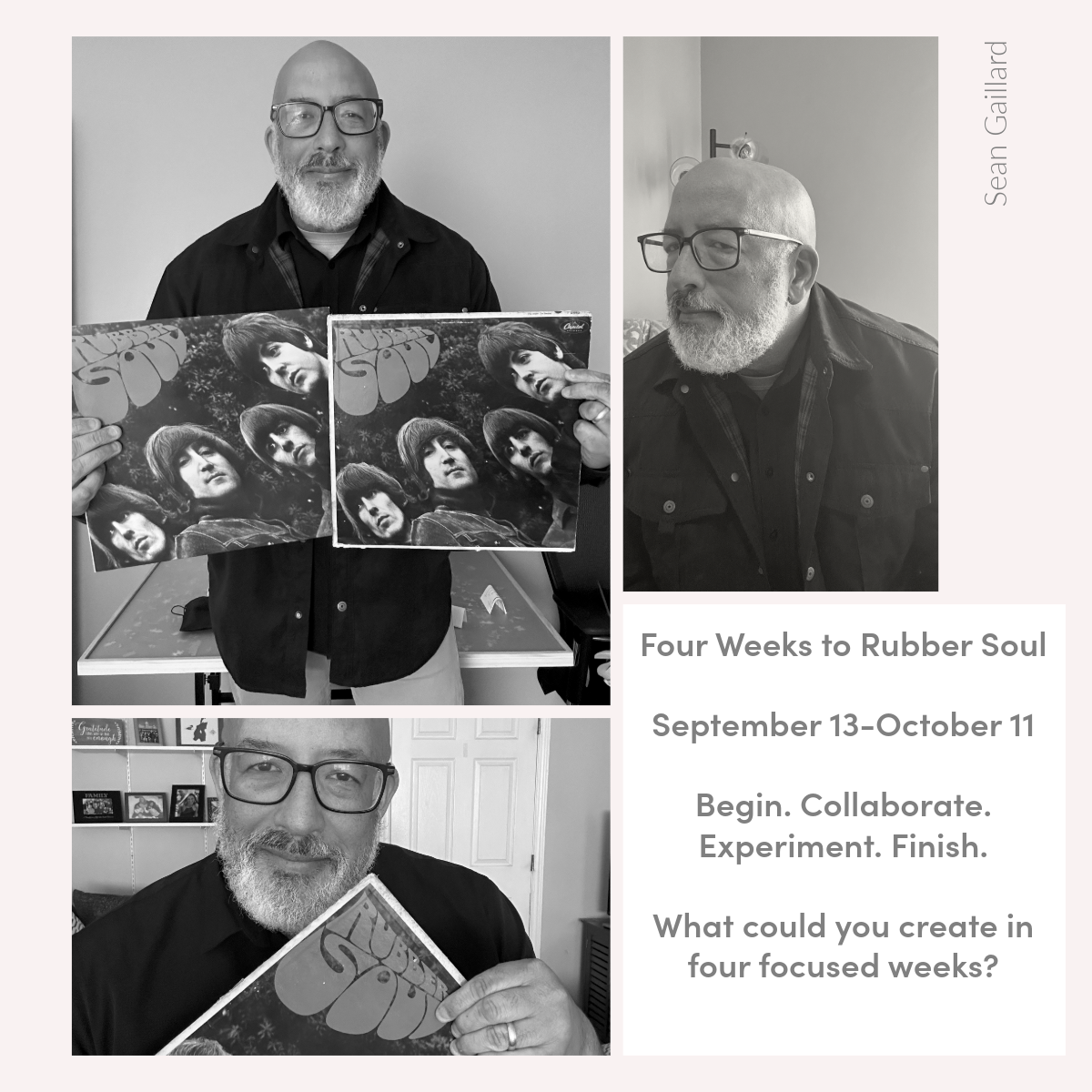
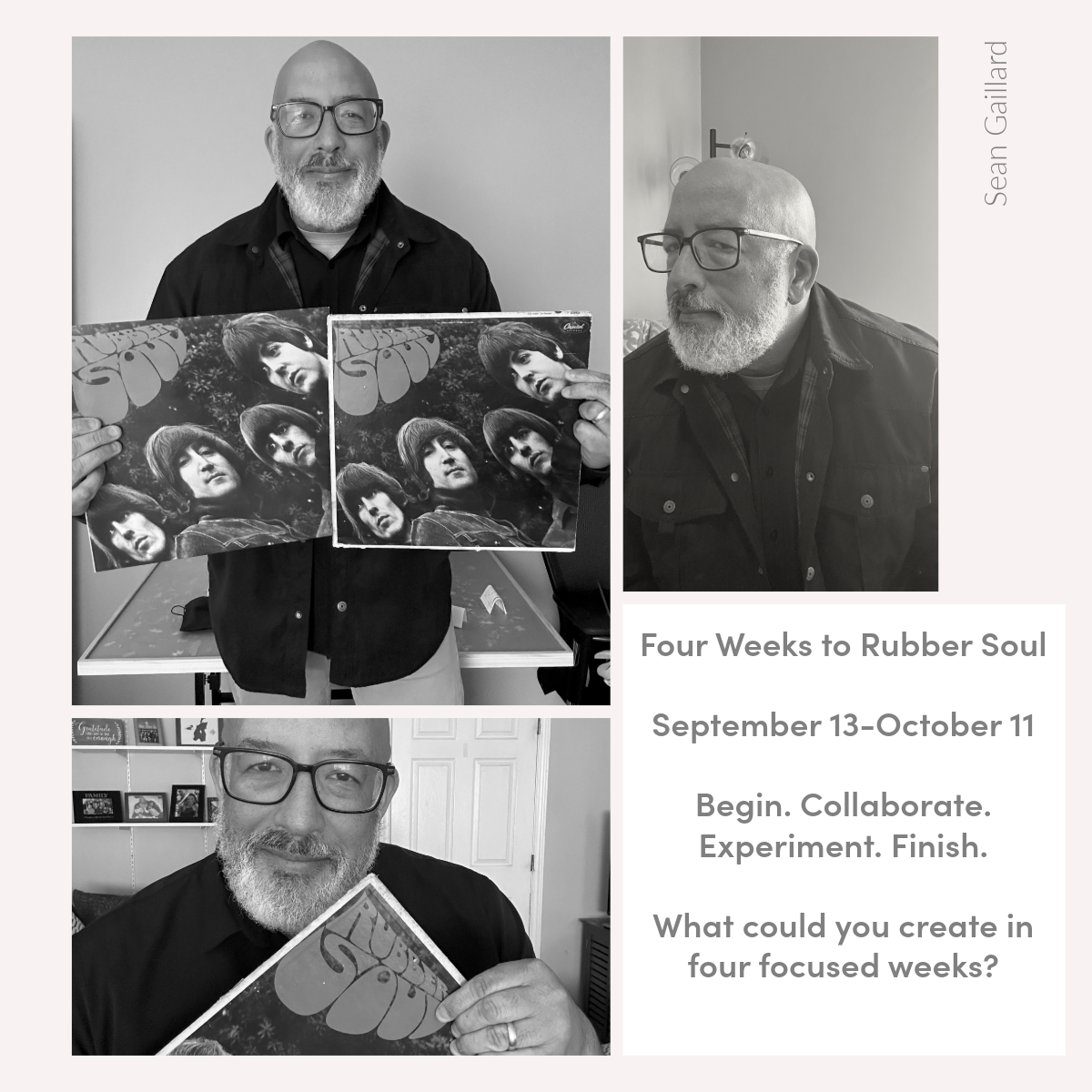
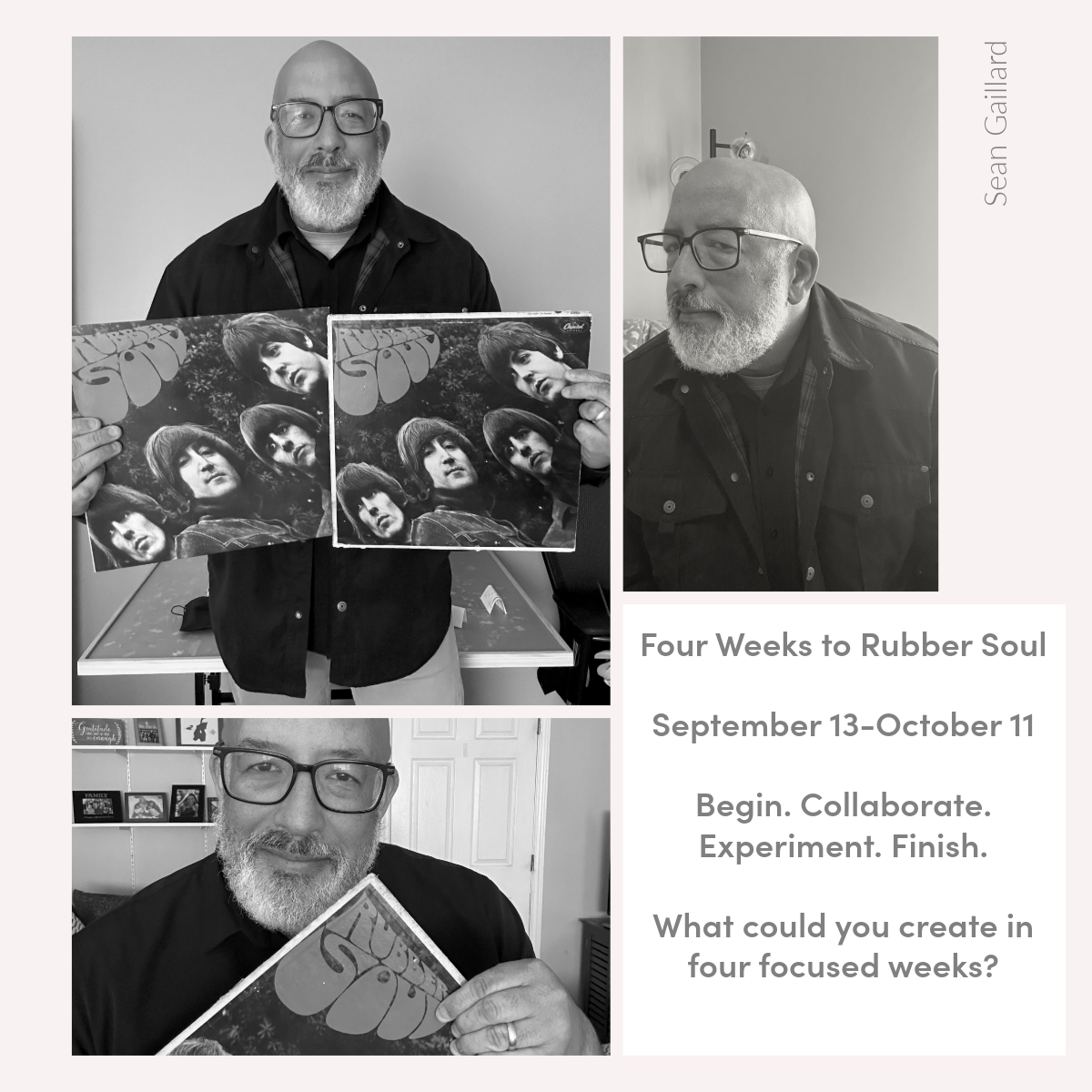
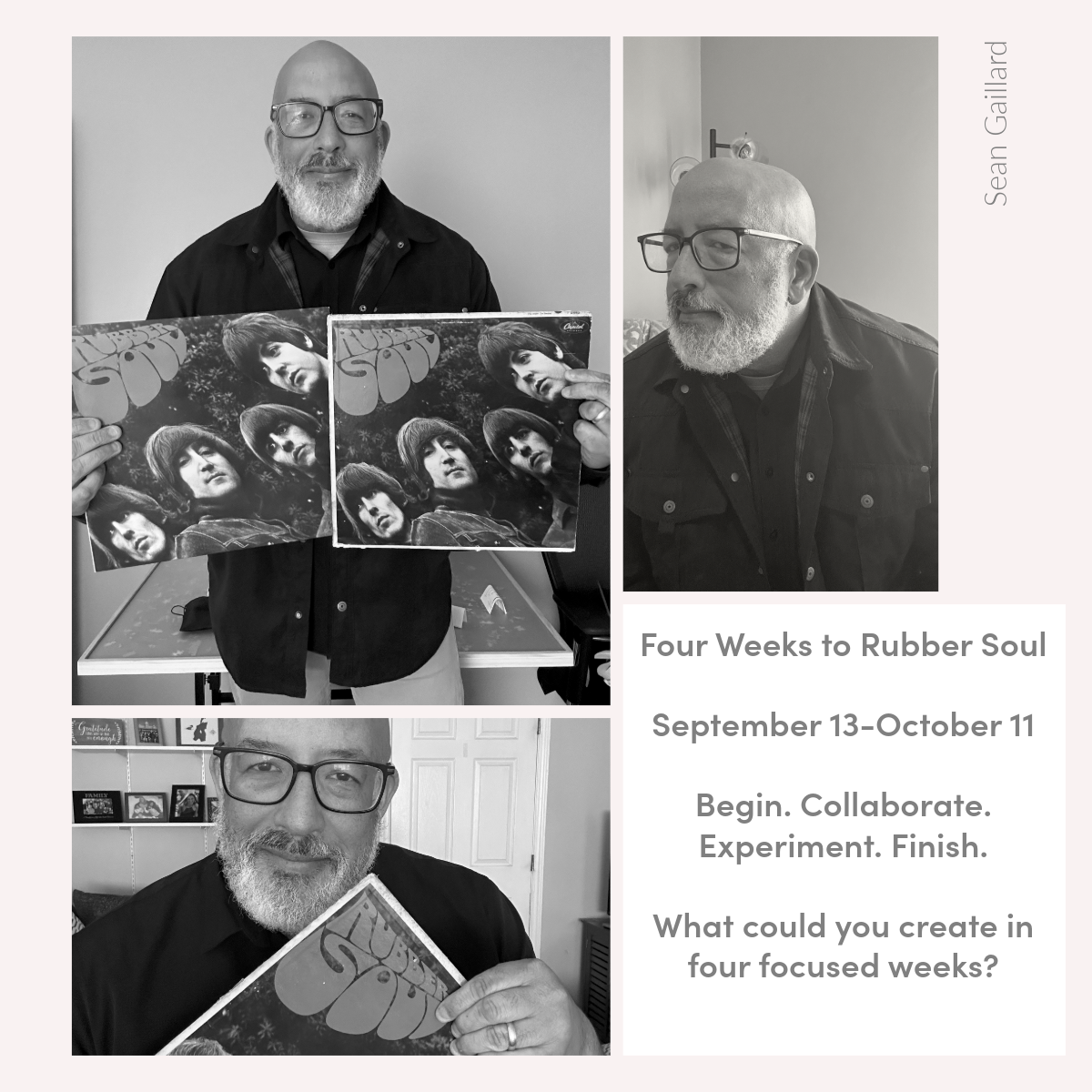
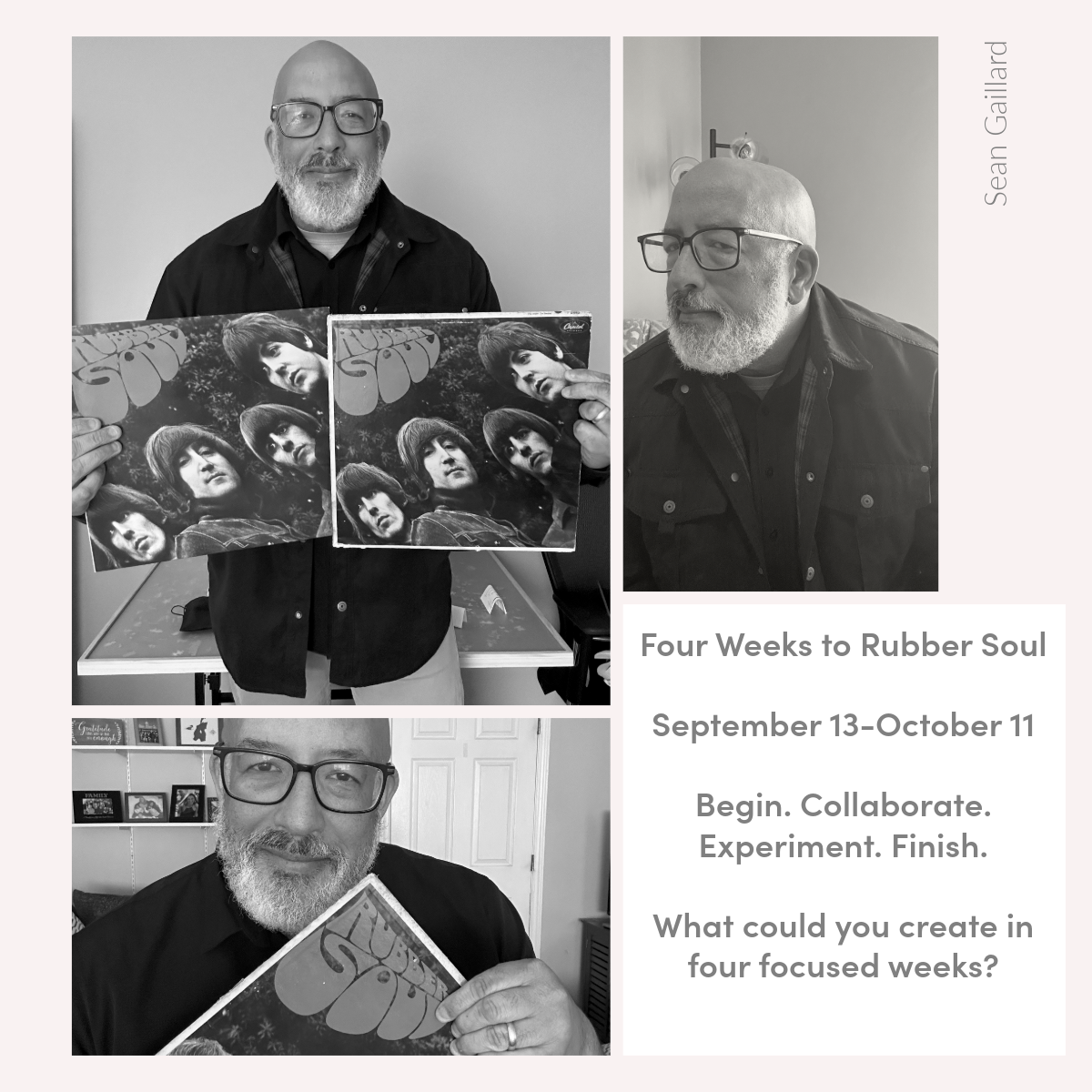
Sometimes a familiar album can suddenly sound like a new world. The new Rubber Soul reissues arrived today, and I picked up the five LP Super Deluxe Edition. The packaging is beautiful, the 88 page book is a liner notes dream, and the real revelation begins when the needle drops.
Listening to the different takes and demos brings me closer to the four musicians in the room. I hear details that remind me how much Rubber Soul was built through listening, collaboration, harmony, and trust. They sound locked in with one another, energized by the possibilities opening around them.
Paul McCartney has described The Beatles as a “great little band,” and these sessions bring that description to life. Beneath the mythology were four musicians working together, responding to one another, and discovering where a song might lead. You can hear the synergy, the harmonies taking shape, and the joy of discovery.
That is why I keep returning to Rubber Soul as a frontier album. The Beatles were standing between the world they knew and a new world they were beginning to create. They were moving beyond familiar territory with curiosity, courage, and one another.
Creative frontiers ask the same of us. We do not need to know exactly where the journey will lead. We need enough curiosity to explore, enough courage to try, and enough trust to keep moving toward the horizon.
This week of Four Weeks to Rubber Soul has been about curiosity, trying, playing, and taking risks. Today, I decided to follow that same spirit by trying something completely new. In honor of the new Rubber Soul release, I recorded my first unboxing video. It may not be perfect, but crossing a frontier rarely begins with perfection. In fact, I didn’t include my remote microphone in the recording of the video, so I had to do a quick voiceover. I found it amusing to do my own accidental director’s cut of the reel. It begins by trying something new. Here is my first step into another little creative frontier.
By the time The Beatles entered the recording studio in October 1965 to begin work on “Rubber Soul,” they had already conquered the world. Their early songwriting had established them as an extraordinary creative force. Songs like “She Loves You” and “I Want to Hold Your Hand” had helped define an entire generation.
They could have continued following that successful formula. Their audience certainly loved it. Instead, The Beatles decided to venture beyond the familiar and take some creative risks.
Listen to “Nowhere Man,” “Norwegian Wood,” and “In My Life.” These songs reveal a band growing beyond its earlier creative boundaries. Their songwriting was becoming more introspective, their musical influences were expanding, and their willingness to experiment was increasingly evident. There was a maturity emerging in their music that went beyond the familiar love songs of Beatlemania.
The Beatles were not rejecting their past. They were discovering their future. Sometimes, that is precisely what taking a creative risk can accomplish.
The Risk of Putting Yourself Out There
Earlier this year, I submitted a book proposal about an album I deeply love. I invested considerable time, research, and personal energy into the project. Nearly five months later, I am still waiting for a response.
Some mornings, the uncertainty weighs heavily. I wonder whether I should inquire about the timeline or simply continue waiting. Taking that initial creative risk was exciting. Living with the uncertainty afterward has required a different kind of courage.
I share this because I suspect some of you know that feeling. Perhaps you have submitted a manuscript, applied for an opportunity, launched a project, or shared something meaningful with the world. You have taken the risk, but the response has yet to arrive.
There is a vulnerability in putting something you believe in before an audience, an editor, or a decision maker. We hope our work will resonate. We hope someone will recognize the possibilities we see. Sometimes, however, all we can do is wait.
Here is something I am learning. Taking a risk means accepting that we cannot control the outcome. Staying creative means refusing to let that uncertainty silence our next idea.
Keep Discovering What Is Possible
The Beatles did not know exactly where their experiments on “Rubber Soul” would lead. They continued exploring anyway. Their willingness to move beyond what had already worked opened the door to an extraordinary period of creative growth.
Perhaps that is the lesson for all of us. We do not have to abandon our past accomplishments to discover new possibilities. We simply need the courage to venture beyond what is comfortable.
I am still waiting for that response to my book proposal. Regardless of the outcome, I am glad I took the risk. The experience has reminded me that creative growth requires us to embrace uncertainty rather than surrender to it.
Sometimes the greatest creative risk is walking away from what we know works to discover what might be possible.
Whatever creative risk you are contemplating today, give yourself permission to try. Your next idea deserves a chance, even when the outcome remains unknown.
When we think about The Beatles, we often focus on the finished masterpieces. We celebrate the harmonies, innovative arrangements, and timeless songwriting. What we sometimes overlook is the joy of four musicians simply playing together.
During the “Rubber Soul” sessions, The Beatles recorded an instrumental called “12 Bar Original.” It was a bluesy groove that owed something to the musical spirit of Booker T. & the MGs. The recording never made the album, but it offers an intriguing glimpse into the band’s creative process.
A few days later, while rehearsing George Harrison’s “Think for Yourself,” the Beatles were joking, improvising, and laughing as George Martin recorded their exchanges. These were musicians working under intense pressure to finish an album, yet they still found room for a little fun.
There is something wonderfully human about these moments. Even The Beatles needed opportunities to explore, laugh, and enjoy the experience of making music. Creativity did not always have to begin with the expectation of producing another classic.
Sometimes the most important thing we can do is give ourselves permission to play. Play is the catalyst to bring joy back into the conversation for any creative pursuit.
Here’s a question to consider: When was the last time you allowed yourself to play with an idea simply for the joy of discovering where it might lead?
Yesterday, we explored the importance of curiosity and the willingness to ask, “What if?” Curiosity opens the door to new possibilities, invites us to question familiar approaches, and encourages us to imagine something different. There is something exciting about allowing ourselves to wonder what might be possible.
Today, we take that curiosity one step further with a simple but powerful word: Try. Curiosity encourages us to imagine what might be possible, while trying requires us to take action and discover what happens.
Trying something new can be challenging. It can be uncomfortable, a little scary, and even risky. The moment we move an idea from our imagination into the world, we make ourselves vulnerable. Others might embrace what we create, question our intentions, or criticize our efforts. We might even begin questioning ourselves before anyone else has an opportunity to respond.
That is one of the challenges of creativity. We cannot always know how something will turn out until we give ourselves permission to try. There are no guarantees of acceptance, success, or even understanding. Sometimes we simply have to take a chance and see where our curiosity leads us. We cannot wait for that permission to try. Now is the time to try!
The Beatles and the Courage to Try
One of the remarkable qualities of “Rubber Soul” is the willingness of The Beatles to explore new creative territory. By the fall of 1965, they had already achieved extraordinary commercial success. They could have continued recording music using familiar approaches and formulas that had served them well. Instead, they continued pushing their sound forward. They knew that they had to grow and evolve as a band. This growth happened in the course of a month under a looming deadline from the record company.
Their songwriting was becoming more introspective, their musical influences were expanding, and their recording sessions were becoming opportunities to experiment with different sounds and arrangements. Producer George Martin played an important role in this process, helping the group translate their growing creative ambitions into the recordings we continue to enjoy today. His willingness to experiment alongside the Beatles helped create an environment where new ideas could flourish.
Consider a few examples from Rubber Soul that demonstrate this willingness to try:
On “I’m Looking Through You,” the Beatles recorded three different versions of the song before arriving at the arrangement that appeared on the album. They explored different tempos, instrumentation, and musical passages. An earlier version, eventually released on “Anthology 2,” sounds noticeably different from the familiar recording. They continued experimenting because they believed there was something more to discover within the song.
On “Girl,” John Lennon’s intimate vocal performance includes the distinctive sound of his breathing, deliberately emphasized in the recording. George Harrison’s acoustic guitar incorporates a sound inspired by Greek music, adding another dimension to the arrangement. These musical choices reflected the group’s growing interest in exploring sounds and influences beyond their earlier recordings.
Perhaps one of my favorite examples is “In My Life.” George Martin wanted to add an intricate piano solo but found that playing the passage at the desired speed presented a challenge. His solution was wonderfully inventive. He recorded the piano at half speed and played the tape back at normal speed, creating the distinctive sound that gives the song such an unforgettable musical moment.
Imagine what might have happened had Martin simply abandoned the idea because the original approach was not working. We would have missed one of the most memorable musical moments on the album. His willingness to try a different approach helped create something that continues to resonate with listeners more than sixty years later.
Each example reminds us that experimentation requires more than having an interesting idea. It requires the willingness to pursue that idea, explore different possibilities, and discover what happens. The Beatles did not know that every experiment would succeed. They simply continued trying, with George Martin serving as a creative partner who helped bring their ideas to life.
What Happens When We Try?
There is an important leadership and creativity lesson in these recording sessions. We often spend considerable time imagining what could happen if we pursued something different. We think about the possibilities, consider the challenges, and sometimes become so concerned about the outcome that we never take the first step.
What if nobody likes the idea? What if the project fails? What if someone questions our ability or criticizes our intentions? These questions can become barriers that prevent us from discovering what might be possible. We can spend so much time anticipating the reactions of others that we lose sight of the excitement that inspired our curiosity in the first place.
Trying requires us to move beyond those questions and give an idea an opportunity to develop. It also requires us to recognize that the value of our creative efforts cannot always be measured by immediate applause, widespread acceptance, or the number of people who notice our work.
Sometimes the greatest value comes from what we learn along the way. We discover new possibilities, develop greater confidence, and uncover strengths that might have remained hidden had we never attempted something different. There is growth in the process itself, even when the outcome does not match our original expectations.
Trying is not a guarantee of success. It is a commitment to possibility.
That is an important distinction because experimentation does not demand that everything work perfectly the first time. It invites us to learn from the experience, make adjustments, and continue growing. Creativity often develops through a series of attempts that move us closer to discovering something meaningful.
My Own Journey of Trying
I think about this often when I reflect on my own creative journey. Several years ago, I had an idea to write a book connecting the Beatles’ “Sgt. Pepper’s Lonely Hearts Club Band” era with leadership, creativity, collaboration, and education. On the surface, it might have seemed like an unusual combination. What could a groundbreaking album from 1967 teach us about leading schools and organizations?
I believed there was a powerful connection worth exploring. The creative spirit that made the “Sgt. Pepper” album such a remarkable achievement offered lessons that could extend far beyond the recording studio. I wanted to explore how those lessons might inspire educators and leaders to approach their work with greater imagination, courage, and collaboration.
That idea eventually became my book, The Pepper Effect. Writing it required me to step beyond familiar approaches to educational leadership and bring together two passions that had shaped my life. It was an opportunity to try something different and share a perspective that I believed could make a meaningful contribution.
It was also a risk. I encountered skepticism and my share of ridicule along the way. There were moments when I questioned whether anyone would understand what I was attempting to create. I had my own doubts about whether this approach would resonate with others.
Fortunately, I kept trying. The Pepper Effect has since reached educators and schools around the world, encouraging conversations about innovation, creativity, collaboration, and the importance of building a culture where everyone has an opportunity to contribute. The book has opened doors to meaningful conversations and connections that I could never have anticipated when I first began writing. I first knew the book had made an significant impact on others when it was adapted for stage by a school in Canada.
None of that would have happened had I allowed my doubts or the criticism of others to prevent me from moving forward. I am grateful that I took the chance, even when the outcome remained uncertain. The experience continues to remind me that some of our most meaningful creative contributions begin with the courage to pursue an idea that others might not immediately understand.
Continuing to Try
I find myself returning to this lesson as I continue creating “Four Weeks to Rubber Soul.” Every day, I am writing a new blog post and recording a new reel inspired by the creative journey of the Beatles. I am exploring ideas, making connections, and sharing reflections that I hope will encourage others to embrace creativity in their own lives and leadership.
Some posts connect with people immediately. Others receive relatively little attention. There are moments when the response is encouraging and others when I wonder whether the message is reaching anyone at all. The temptation to measure the value of creative work through views, comments, and reactions is certainly real.
In spite of all that, I am learning to appreciate something more important about this experience. Every day provides another opportunity to develop my voice, explore an idea, and create something that did not exist the day before. I am trying different approaches to communicating, connecting with an audience, and bringing my love of music into conversations about creativity and leadership.
I cannot control how many people will encounter a particular post or whether a message will resonate with everyone. I can control my willingness to keep creating and sharing the work. I can also choose to appreciate the people who are following this journey and finding something meaningful in these daily reflections.
There is a certain freedom in that realization. We do not need the approval of the masses to pursue something that matters. We do not need to know that everyone will understand our intentions. We certainly do not need a guarantee that our ideas will be immediately embraced.
We need the courage to begin and the willingness to keep learning. Sometimes that means moving forward when the applause is quiet or when our work does not receive the attention we had hoped to generate. The important thing is to remain connected to the purpose that inspired us to create in the first place.
The Beatles certainly had an audience waiting for their next release in 1965. They also had expectations surrounding their work and considerable pressure to continue delivering successful recordings. Their willingness to pursue new musical directions reminds us that creativity requires a commitment to growth, even when familiar approaches might seem more comfortable. “Rubber Soul” is an quantum leap from their previous albums and The Beatles were very much aware of that upon its release.
Give Yourself Permission to Try
As we continue our week of Experiment, I invite you to consider something you have been wanting to pursue. Perhaps it is a creative project, a different approach to leadership, an idea for your classroom, or a conversation that might open the door to something new. It might even be something you have been considering for years without finding the courage to begin.
Maybe you have been holding onto that idea because you are unsure how others will respond. Perhaps you are waiting for the perfect moment or hoping to develop enough confidence before taking the first step. There will always be reasons to hesitate, especially when we allow the possibility of criticism or disappointment to overshadow our curiosity.
Give yourself permission to try. You do not have to have every detail figured out before beginning. You can learn as you go, make adjustments when necessary, and discover possibilities that might never have occurred to you during the planning process.
The Beatles did not discover the possibilities of “Rubber Soul’ by remaining satisfied with what they already knew. They explored different sounds, experimented with recording techniques, and followed their growing curiosity into unfamiliar creative territory. Their willingness to try helped create an album that continues to inspire listeners more than sixty years later.
We have no way of knowing what our own experiments might eventually inspire. The person who needs to hear our message, experience our creativity, or benefit from our leadership might be someone we have not even met. Our willingness to try might also encourage someone else to take a chance on an idea they have been reluctant to pursue.
As I reflect on The Pepper Effect and my continuing journey with Four Weeks to Rubber Soul, I am reminded that some of the most meaningful things we create begin with a willingness to take a chance. There will be challenges, moments of uncertainty, and occasions when our efforts do not unfold as we originally imagined. Those experiences are part of the creative journey and can become opportunities to discover something new. Don’t let those doubts compel you to abandon what you are creating.
Curiosity helps us imagine what might be possible. Trying gives those possibilities a chance to become real.
Keep exploring and keep creating. Give yourself the opportunity to discover something new, even when the outcome remains uncertain. The world does not need another perfect imitation of something that already exists. It needs people who are willing to bring their unique voices, perspectives, and ideas into the creative process. You never know what might happen until you try. That simple act of courage could become the beginning of something meaningful for you and for the people who encounter your work.
Perhaps your next creative experiment will become something you never imagined possible. There is only one way to discover what that might be.